
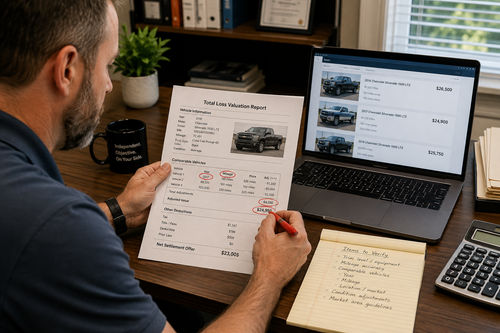
A total loss valuation report can look official, detailed, and precise. It may contain vehicle information, comparable vehicles, mileage adjustments, condition ratings, market calculations, taxes, fees, and a final settlement figure.
That does not mean every detail in the report is automatically correct.
Many valuation disputes begin with something surprisingly simple: the report contains information that does not accurately describe the vehicle, the comparable vehicles are not truly comparable, or adjustments have been applied in ways that deserve a closer look.
For Georgia vehicle owners, understanding how to review a valuation report can be just as important as understanding the final settlement number. A mistake early in the valuation process can affect everything that follows.
Key point: Do not review only the final dollar amount. A total loss settlement is built from the information underneath it, and errors in that information can affect the value being offered.
Error #1: The Vehicle Is Described Incorrectly
One of the first things to check is whether the valuation report accurately describes the vehicle that was actually lost.
Review the basic vehicle information carefully:
- Year
- Make
- Model
- Trim level
- Body style
- Engine
- Drivetrain
- Cab configuration
- Bed length
- Seating configuration
- Mileage
- Factory packages and major options
A valuation for a base-model vehicle may not accurately represent a higher-trim version. A two-wheel-drive truck may not be a good substitute for a four-wheel-drive truck. A regular cab may not reflect the market value of a crew cab. Missing premium equipment can also affect the comparison.
Before debating the final value, make sure the report begins with the correct vehicle.
Error #2: Important Options or Factory Equipment Are Missing
Vehicle value is not determined by model name alone. Factory equipment and option packages can make a meaningful difference in what buyers are willing to pay.
Depending on the vehicle, that may include:
- Four-wheel drive or all-wheel drive
- Premium trim packages
- Leather seating
- Advanced driver-assistance features
- Premium audio
- Navigation or technology packages
- Towing packages
- Third-row seating
- Sunroof or panoramic roof
- Upgraded wheels
- Special appearance packages
- Factory performance packages
If major equipment is missing from the report, a factory window sticker, VIN-specific build information, photographs, purchase documentation, or dealership records may help establish the correct configuration.
Our guide on Actual Cash Value in Georgia explains why the vehicle’s actual configuration matters when determining market value.
Error #3: The Comparable Vehicles Are Not Truly Comparable
This is one of the most important parts of a total loss valuation review.
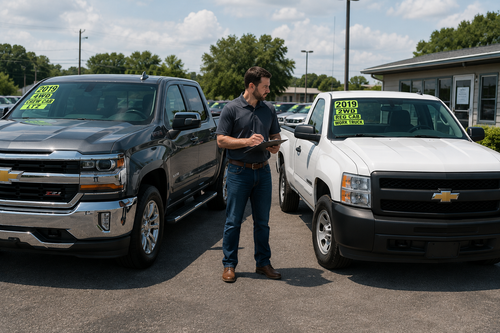
Georgia’s first-party total-loss rules describe comparable automobiles using factors that include the same manufacturer and model year, similar body style, similar options, and similar mileage. The rules also address the geographic market from which comparable vehicles may be selected.
That matters because two vehicles can share the same model name while being very different in the marketplace.
Consider the difference between:
- Four-wheel drive and two-wheel drive
- Crew cab and regular cab
- Premium trim and work-truck trim
- Low mileage and substantially higher mileage
- Loaded equipment and basic equipment
- Different engines or powertrains
If a lower-value vehicle is being used as a comparable, ask whether the differences have been properly recognized and adjusted.
Key point: “Same model” does not always mean “comparable vehicle.” The details of the configuration matter.
Error #4: Mileage Differences Are Not Handled Properly
Mileage can significantly affect the market value of a used vehicle.
If your vehicle had substantially fewer miles than the vehicles being used as comparables, the valuation should account for that difference. Likewise, a comparable with unusually low mileage may require an adjustment in the opposite direction.
Check both the mileage listed for your own vehicle and the mileage of every comparable vehicle in the report.
A simple mileage error can distort the comparison before any other adjustment is made.
Error #5: The Geographic Market Is Too Far Removed
Vehicle values can vary by location, so the market area used in the valuation matters.
For certain Georgia first-party total-loss settlements, the rules first look to comparable automobiles available within the local market area, defined as 50 miles from the county seat where the insured vehicle was principally garaged. If adequate comparable vehicles are not available there, the rule permits expansion to nearby areas under specified conditions.
That does not mean every vehicle outside the immediate area is automatically improper. It does mean the geographic source of the comparables is worth reviewing.
If several comparables come from distant markets, ask why the search had to be expanded and whether closer vehicles were available.
Error #6: Old or Questionable Listings Are Being Used
A valuation should reflect the market around the time of the loss, not simply any listing that can be found.
Georgia’s rule addresses vehicles that are currently available or were available within the previous 30 days when using certain comparable-vehicle methods.
Review the dates associated with the comparable listings when that information is available.
A stale listing, unavailable vehicle, incorrect advertisement, or listing that cannot be verified may deserve additional scrutiny.
Error #7: Adjustments Are Difficult to Explain
Valuation reports often adjust comparable vehicles to account for differences between those vehicles and the one that was lost.
Those adjustments may involve:
- Mileage
- Trim level
- Options
- Equipment
- Condition
- Geographic location
- Vehicle configuration
An adjustment is not automatically wrong simply because it lowers the value. The important question is whether the adjustment makes sense and is supported by the actual differences between the vehicles.
If you cannot understand why an adjustment was applied, ask for an explanation.

Error #8: Condition Adjustments Do Not Match the Vehicle
Condition is another area where disagreements can arise.
A vehicle with significant prior damage, unusual wear, missing parts, or poor overall condition may reasonably be valued differently from an exceptionally maintained example. But the condition assigned to the vehicle should have a factual basis.
For Georgia first-party property damage claims, the rules require certain betterment or depreciation deductions to be documented, itemized, and tied to measurable differences in market value or specified vehicle-condition issues.
That makes photographs, maintenance records, service history, inspection notes, and other evidence of pre-loss condition useful when a condition deduction appears questionable.
Do not assume a generic “average condition” rating accurately describes every vehicle.
Error #9: Taxes and Transfer-Related Fees Are Missing
The settlement calculation is not limited to the vehicle’s base market value.
Georgia’s cash-equivalent method for applicable first-party total loss claims includes applicable taxes, license fees, and other fees incident to transferring ownership of a comparable automobile, subject to the limits contained in the rule.
When reviewing a settlement, look beyond the vehicle value and examine the entire calculation.
If taxes or applicable transfer-related fees appear to be missing, ask how the final settlement amount was calculated.
Error #10: The Deductible or Other Deductions Are Applied Incorrectly
The deductible should match the applicable policy terms.
Also review any other deductions listed in the settlement calculation. Depending on the circumstances, those may involve salvage retention, prior damage, betterment, depreciation, or another adjustment.
The presence of a deduction is not necessarily an error, but every deduction should have a clear reason.
If the numbers do not add up, request an itemized explanation.
Error #11: The Report Relies Too Heavily on an Automated Number
Modern valuation reports may use databases, market-data systems, or other electronic valuation sources.
Georgia permits statistically valid fair-market-value sources under specific standards, including consideration of local-market data, major vehicle options, and current information from the surrounding area or a justified expansion of those parameters.
The fact that a number came from a computer system does not remove the need to verify the underlying vehicle information and market data.
An automated process can still produce an inaccurate result if the information entered into it is wrong or incomplete.
Error #12: The Vehicle Owner Reviews Only the Final Number
This may be the most common mistake of all.
A vehicle owner sees the settlement amount, decides it is too low, and immediately begins arguing about the number without first identifying why it may be low.
A stronger review works backward:
- Verify the subject vehicle
- Verify the trim and equipment
- Verify the mileage
- Review every comparable vehicle
- Review the market area
- Review the adjustments
- Review the condition rating
- Review taxes and fees
- Review every deduction
- Then examine the final settlement amount
That approach turns a general complaint into a specific valuation review.
What Should You Do If You Find an Error?
Document it.
If the wrong trim level is listed, provide evidence of the correct trim. If equipment is missing, document the equipment. If the comparable vehicles are substantially different, identify the differences. If mileage is incorrect, provide the correct mileage. If a condition adjustment appears unsupported, gather evidence of the vehicle’s pre-loss condition.
Then communicate the disagreement clearly and specifically.
Our guide on What to Do If You Disagree With an Insurance Settlement Offer in Georgia explains the next steps for organizing and presenting those concerns.
If your total loss offer already appears too low, you may also want to review Total Loss Offer Too Low in Georgia.
When the Appraisal Clause May Become Important
If the disagreement ultimately involves the amount of loss, your insurance policy may contain an appraisal provision that offers a process for resolving certain valuation disputes.
The exact policy language controls whether appraisal applies and how the process works.
Our guide on the Auto Insurance Appraisal Clause in Georgia provides a more detailed explanation.
Key point: A valuation report should be reviewed as a chain of information. If the vehicle details, comparable vehicles, adjustments, condition, or deductions are wrong, the final number may be affected.
Have Your Total Loss Valuation Report Reviewed
If you received a total loss valuation report and something does not look right, you do not have to rely on guesswork.
Collision Safety Consultants of Central Georgia can review the subject vehicle information, comparable vehicles, mileage, options, equipment, condition adjustments, geographic market, deductions, and other details used to develop the valuation.
The goal is to identify whether the report accurately reflects the vehicle and the market information supporting the settlement.
Serving Drivers Across Georgia
Collision Safety Consultants of Central Georgia works with drivers throughout Augusta and Central Georgia, as well as Metro Atlanta, Athens, Gainesville, Rome, Ringgold, and surrounding communities.
Questions About Your Total Loss Valuation Report?
If the vehicle information, comparable vehicles, adjustments, or final value do not seem right, have the report reviewed before making a final decision.
Request a Free Consultation Call or Text (803) 624-9745Total Loss Valuation Report Errors in Georgia
Questions & Answers
What should I check first in a total loss valuation report?
Start by verifying the vehicle itself. Check the year, make, model, trim level, drivetrain, mileage, body style, equipment, and major factory options. If the report begins with incorrect vehicle information, the final valuation may also be affected.
Can the wrong trim level affect a total loss settlement?
Yes. A higher trim level may have significantly different market value than a base model. Premium equipment, drivetrain, cab configuration, seating, technology packages, towing equipment, and other factory features can all affect value.
What makes a comparable vehicle questionable?
A comparable may deserve closer review if it differs substantially in model year, body style, trim, drivetrain, mileage, equipment, configuration, condition, or geographic market. Vehicles with the same model name are not always truly comparable.
Can high-mileage comparables lower my valuation?
They can affect the comparison. Mileage differences should be reviewed carefully, especially when the comparable vehicles have substantially more or fewer miles than the vehicle being valued.
Does the location of the comparable vehicles matter?
Yes. Market location can affect vehicle prices. Georgia’s first-party total-loss rules address local and nearby market areas when comparable vehicles are used, so the geographic source of the vehicles is worth reviewing.
What if I do not understand the adjustments in the report?
Ask for an explanation. Adjustments may involve mileage, condition, options, equipment, trim, vehicle configuration, or location. The important question is whether each adjustment makes sense and accurately reflects the differences between the vehicles.
Can a condition adjustment be challenged?
If the assigned condition does not appear to match the vehicle’s actual pre-loss condition, supporting evidence such as photographs, service records, maintenance history, inspection notes, and other documentation may help support a review.
Should taxes and fees appear in a total loss settlement?
For applicable Georgia first-party total loss claims, the settlement method includes certain applicable taxes, license fees, and other transfer-related fees. Review the full settlement calculation, not just the vehicle’s base value.
What should I do if I find an error in the valuation report?
Document the specific problem and provide reliable supporting information. That may include a build sheet, window sticker, VIN-specific equipment information, photographs, comparable listings, mileage records, maintenance records, or an independent valuation review.
Can an independent appraiser review a total loss valuation report?
Yes. An independent vehicle professional can review the subject vehicle information, comparable vehicles, market data, mileage, options, condition adjustments, deductions, and other details used to calculate the settlement.